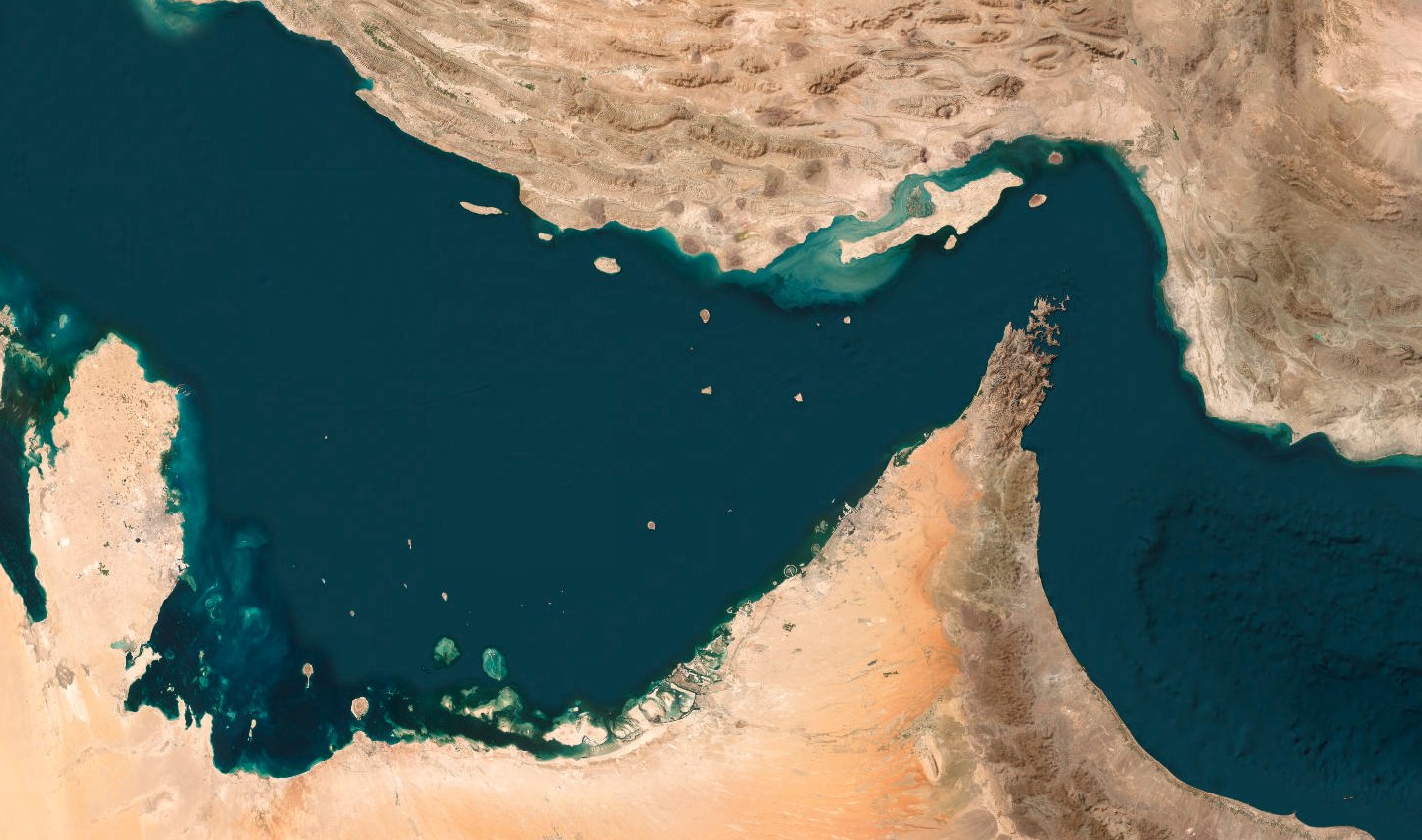
Almost everything we hear about Hormuz is about oil.
Six months into the closure, the oil numbers are well covered: transit down to a few percentage points of normal, war risk premiums at multiples of the pre-crisis rate, Brent up more than twenty percent. But the Middle East Gulf is also a major global source of urea and sulphur which are both byproducts of the region's oil and gas refining, and that trade has been disrupted alongside oil since the closure began on 28 February. Sri Lanka and Thailand are the most exposed importers by share, and India by absolute value. This also has knock-on food security implications: urea is fertilizer, and a fertilizer supply shock reaches a farmer's input costs the next planting season.
Put together for a live segment on the Granular podcast with Holly Birkett, recorded 27 August 2026.
Hear more on TradeWinds' WavelengthOman provides supplies a great deal of fertilizer and it is outside the Hormuz Strait. But...
The easiest way to state Gulf fertilizer exposure is in a single country-level number: "India's urea imports are roughly 63% dependent on the Gulf." But a large part of India's urea supply comes from Oman's main fertilizer export terminal, Sur which sits on the Gulf of Oman coast, seaward of the strait. A vessel loading at Sur never enters the Middle East Gulf and is not as dependent on Hormuz being open as it would seem.
India's OMIFCO joint venture with Oman provides a dedicated bilateral supply arrangement between the two countries and means that Oman supplies about 57.8% of India's Gulf-sourced urea by value. India still has a Hormuz-specific urea dependency closer to 27%. Sri Lanka and Thailand have smaller Oman shares, 15.3% and 20.9% respectively, which means that Sri Lanka is roughly 66% dependent on Hormuz and Thailand roughly 53%.
Oman is outside the strait but it is not outside the war risk zone.
The physical correction above does not mean Oman-sourced cargo is priced as safe. The Joint War Committee's Listed Areas circular, JWLA-033, issued 3 March 2026, explicitly names Oman as a listed country, and by the circular's definition, a listed country's ports and coastal waters out to 12 nautical miles are covered unless specifically varied. Sur, Sohar, Duqm, Salalah, and Muscat are all inside the current war risk boundary, which is drawn around the whole theatre, the Middle East Gulf, Gulf of Oman, Arabian Sea, Gulf of Aden and Southern Red Sea, on regional threat exposure, not on which vessels physically transit a specific strait.
Physically, Omani urea does not need Hormuz to reopen, but commercially, the market has not priced Oman as a safe alternative, because the war risk boundary was drawn on the region's overall threat exposure, missile and drone range, general Gulf of Oman risk, rather than on strait transit specifically. A cargo book that assumes Oman-sourced fertilizer is both physically and commercially insulated from the Hormuz crisis would be wrong on the second count even where it is right on the first.
The same numbers, as a picture. Each bar is one country's total urea imports, set to 100%, so length compares composition rather than market size:
India's bar uses its actual 2024 Comtrade import total for HS 3102 ($2,465.1M). Sri Lanka's and Thailand's totals and non-Gulf shares are calculated from each country's Hormuz-routed value divided by its model dependency percentage, not an independent total-imports pull. The Hormuz-specific shares are 26.6%, 65.8% and 53.0% for India, Sri Lanka and Thailand. Correction, 5 October 2026: an earlier version of this page gave India's Gulf-wide dependency as 85% and its Hormuz-specific share as about 36%. The 85% included Russian-origin urea that the model had wrongly routed through Hormuz (a routing error, since corrected), and the 36% was calculated against a mis-derived import total. Against actual 2024 Comtrade data, India's Gulf-sourced share is 63% and its Hormuz-specific share is about 27%.
Bilateral fertilizer trade values: UN Comtrade, HS 3102, 2024 authenticated pulls. Oman routing correction: consistent with the existing Narrows CDM v3 crude and LNG Oman fixes, Mina al-Fahal and Qalhat terminal geography. Joint War Committee Listed Areas: JWLA-033, 3 March 2026, Lloyd's Market Association. Hormuz crisis background: 2026 Strait of Hormuz crisis timeline; Panama Canal Authority advisory, 20 August 2026. Discussed live on the Granular podcast with Holly Birkett, 27 August 2026. See also: El Niño will throttle the Panama Canal, the companion piece from the same podcast appearance. For weekly shipping news context: TradeWinds' Wavelength podcast.
Related coverage, also referenced on the podcast: IFPRI, on rising fertilizer and energy costs for farmers in Brazil and Argentina, and CNBC Africa, on Ivory Coast cocoa farmers going into the season short of fertilizer.