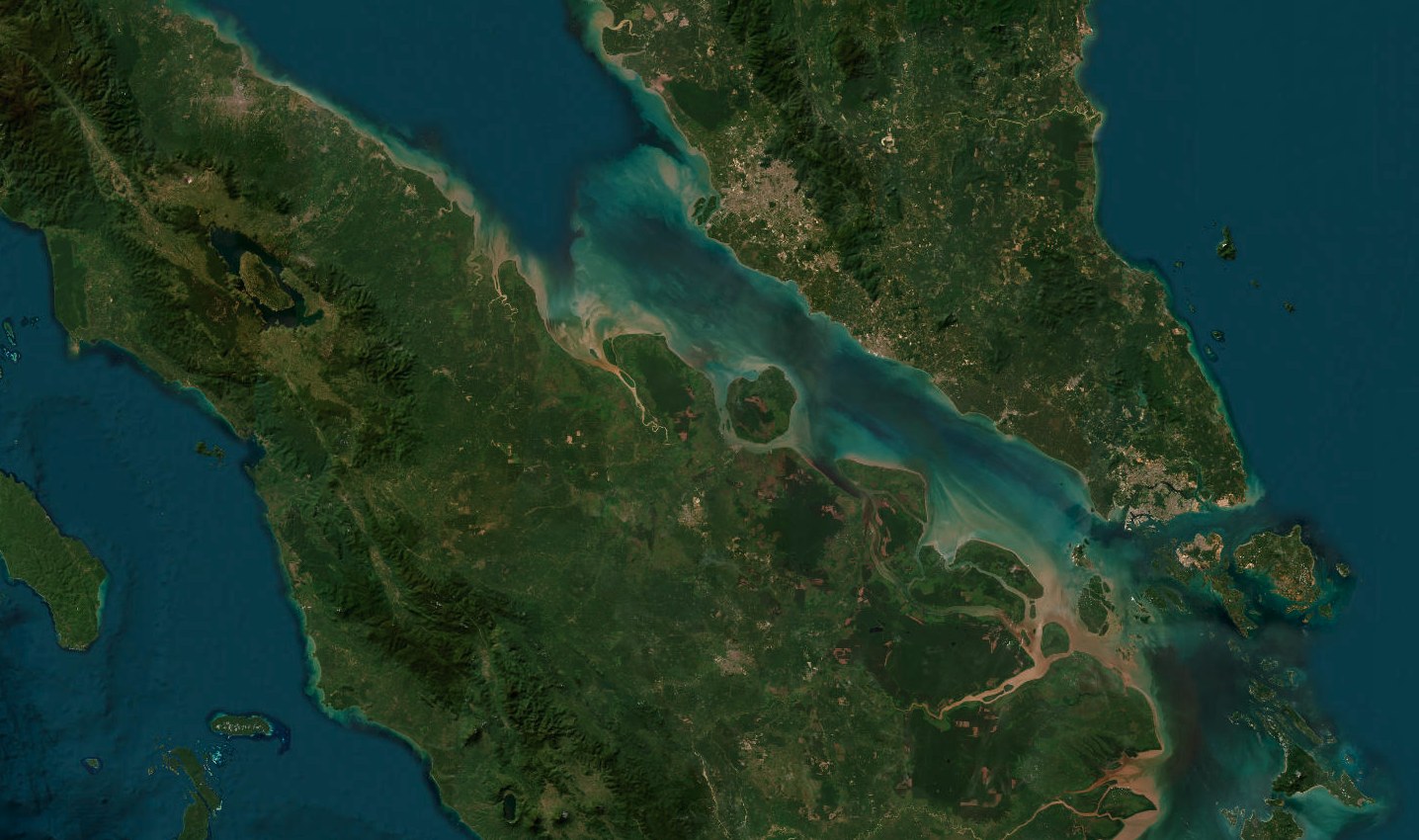
Malacca is not Hormuz. The difference matters for risk pricing.
Most of the coverage of Indonesia's toll proposal drew an implicit comparison to Hormuz the idea being that Malacca offered similar leverage. It does not. The distinction is structural and it shows up directly in the model's capacity sensitivity scores.
This distinction is commercially critical. An underwriter pricing accumulation risk on Malacca exposure cannot simply apply Hormuz assumptions. The effective severity at Malacca after accounting for bypass capacity is 85 cents on every dollar of stated disruption, not 100. The remaining 15 cents is rerouting cost, not lost cargo. That changes the reserve calculation.
Who actually depends on Malacca, and for what.
The aggregate statistic "30% of global seaborne trade transits Malacca" circulates widely and tells you almost nothing useful. What matters is which countries depend on Malacca for which commodities at what percentage of their total seaborne supply. These are the bilateral dependency figures from the Narrows model.
| Country | Primary commodity exposed | Dependency % | Value at risk (100% / 14d) | Exposure |
|---|---|---|---|---|
| China | Crude petroleum | 46.2% | $5.8B | |
| Japan | Crude petroleum (VLCC) | 95.7% | $2.6B | |
| South Korea | Crude petroleum (VLCC) | 75.4% | $2.5B | |
| Singapore | Refined petroleum | 57.2% | $1.2B | |
| China | LNG | 61.2% | $1.0B | |
| Thailand | Crude petroleum | 66.3% | $852M | |
| Malaysia | Refined petroleum (2710) | 82.8% | $843M | |
| Japan | LNG | 50.3% | $800M | |
| South Korea | LNG | 61.1% | $687M | |
| Thailand | LNG | 80.5% | $206M |
What a Malacca toll actually costs, vessel by vessel.
A toll is not a closure. It is a cost imposed on traffic that has a choice: comply and pay, or reroute and pay differently. The economics of that choice vary by vessel class, and the threshold at which diversion becomes cheaper than compliance is specific and calculable.
Iran's Hormuz toll exceeded $1 million per vessel. At that level, Malacca diversion via Lombok becomes economically rational for laden VLCCs carrying crude. Japan and South Korea's iron ore Capesizes already route via the Luzon and Lombok corridors as their primary lanes, so the toll's main burden would fall on crude tankers, not bulk carriers. But "rational" and "seamless" are not the same thing. Lombok has draft restrictions that affect laden VLCCs. Sunda has throughput constraints. A sudden large-scale diversion would create its own congestion-driven disruption at the alternative straits.
Why the Indonesia proposal matters even after being walked back.
Indonesia's finance minister did not mean to start a debate. He did. The significance is not the specific proposal, which was legally dubious under UNCLOS and commercially self-defeating given Indonesia's own Malacca dependency. The significance is what the proposal signals about the environment.
Iran established a working proof of concept: a state can impose tolls on a critical maritime passage, find paying customers, and operate that system in defiance of international maritime law. 230 loaded oil tankers paid or waited. The commercial reality and the legal reality diverged, and the commercial reality won.
Every other littoral state with a chokepoint in its territorial or contiguous waters looked at that and ran the same calculation Indonesia just ran out loud. Thailand is fast-tracking a $31 billion land bridge across the Kra Isthmus, not because it is economically obvious, but because controlling an alternative route to Malacca has geopolitical value that was previously theoretical and is now demonstrated.
The risk management implication is straightforward: structural exposure to any single maritime corridor needs to be quantified as a standing input to risk models, not as a scenario to be run when a crisis emerges. The next disruption whether toll, conflict, blockade, or weather will not provide advance notice.
The aggregate number tells you almost nothing.
The figures that appear in coverage of Malacca disruption risk are predominantly aggregate: "30% of global seaborne trade," "100,000 vessels per year," "$5 trillion in annual trade value." These numbers are real. They are also analytically inert.
An accumulation underwriter at a P&I club needs to know how many of their insured vessels are in-window during a specific disruption duration, carrying what commodity, for which importer. A crude desk at a commodity trading house needs to know what percentage of their specific supply chain depends on Malacca and what diversion costs look like against their current freight rates. A lender financing a Capesize fleet needs to know what a 4-day Lombok detour does to voyage economics across their book.
None of those questions are answered by an aggregate throughput figure. They are answered by bilateral dependency analysis at commodity resolution the dependency percentage for a specific (importer, chokepoint, commodity) triplet, combined with vessel-class-specific rerouting economics. That is what you get when you run it through The Narrows.