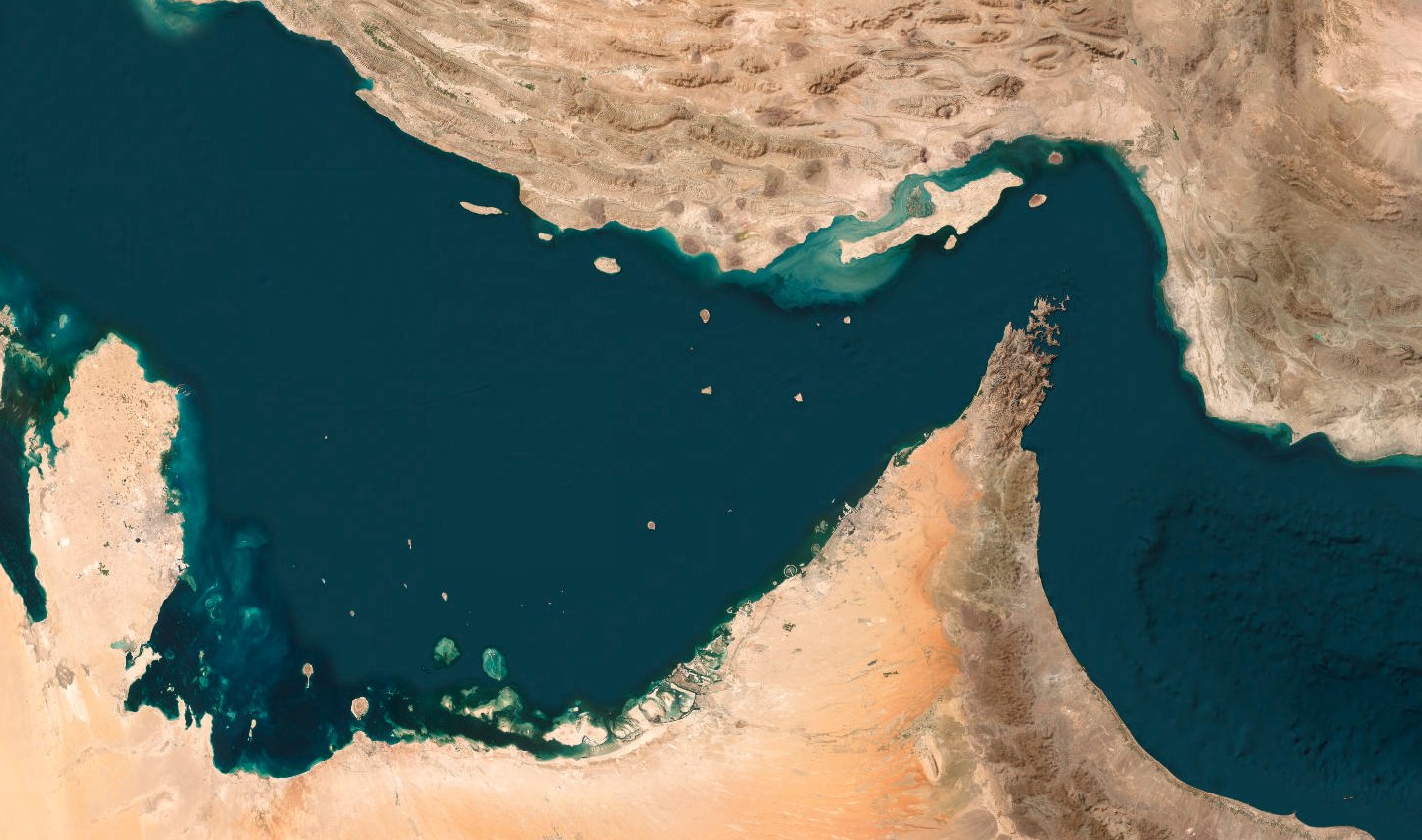
Scenario analysis · Strait of Hormuz · May 2026, updated Aug 2026
Hormuz and the limits of the index.
The Baltic Dirty Tanker Index has risen 156% since the disruption began. These numbers confirm that the market has priced in severe disruption. They cannot tell you which specific bilateral supply chains carry the exposure, at what percentage of total supply, or what each alternative pathway costs for each vessel class.
Narrows Research ·May 2026 ·14 min read
The analytical gap
What market indices can tell you, and what they cannot.
The UNCTAD Strait of Hormuz Dashboard launched 28 April 2026 aggregates the market signal clearly. The Baltic Dirty Tanker Index stands at 2,795, against a 2024 average of 1,091. VLSFO bunker in Singapore has risen from a 2024 average of $571 per tonne to $1,076. Brent crude has traded above $120 on intraday peaks. These are the right numbers to watch. They confirm severity. They do not distribute it.
An accumulation underwriter pricing a P&I book, a crude desk managing a supply position, or a lender stress-testing a Capesize fleet facility needs something the index cannot provide: which specific counterparties carry Hormuz exposure, for which commodity, at what percentage of their total seaborne supply, and what the genuine cost of each rerouting option is at current market rates. Aggregate indices are inputs to that question. Run it through The Narrows and you get the answer.
Hormuz sensitivity score 1.00
No alternative. Full exposure at stated severity.
No navigable route exists for laden VLCCs or LNG carriers transiting out of the Persian Gulf. Qatar's entire LNG export capacity, plus Saudi, UAE, Kuwaiti, and Iraqi crude, exits via a single 33-kilometre navigable channel. A closure does not create a rerouting problem. It creates a supply halt. Capacity sensitivity: 1.00. Every percentage point of stated disruption translates directly to commercial impact with no bypass absorption.
Malacca sensitivity score 0.85
Alternatives exist. They are expensive, not impossible.
Lombok and Sunda Straits provide partial bypass capacity. A Malacca closure or toll is a rerouting problem at 85 cents on the dollar of stated disruption. The remaining 15 cents is absorbed through alternatives, at a cost. Hormuz offers no equivalent release valve. The two chokepoints require fundamentally different analytical frameworks for pricing exposure.
The bilateral dependency matrix
Who is exposed, for what commodity, and at what percentage of supply.
The Narrows model produces bilateral dependency figures at the (importer, chokepoint, commodity) level. The table below shows Hormuz dependency for the commodity classes that account for the majority of the Strait's commercial traffic volume. These are not estimates of aggregate throughput. They are specific bilateral percentages: the share of each importer's total seaborne supply of each commodity that transits Hormuz, drawn from a multi-vintage blend of 2022 and 2024 UN Comtrade bilateral data (CDM v3, rebuilt August 2026).
Updated August 2026: Hormuz-bypass pipeline routing now modeled
The routing engine previously assigned every barrel of Saudi and UAE crude to a Hormuz transit regardless of loading terminal. Saudi Arabia's East-West Pipeline (Yanbu, Red Sea) and the UAE's Abu Dhabi Crude Oil Pipeline (Fujairah, Gulf of Oman) are both real, decades-old infrastructure specifically built to bypass the Strait — see the companion piece on pipeline rebalancing for the mechanics. The model now applies a weighted split across each exporter's real export-basin ports rather than defaulting every Gulf producer's crude to a single Hormuz-transiting basin. This brings Japan's and South Korea's crude dependency down from previous published figures and is corroborated against independent reporting on both pipelines' normal-time utilisation (see method note).
Bilateral Hormuz dependency matrix selected importers and commodities, 2024 (CDM v3, updated Aug 2026)
| Importer | Commodity | Hormuz dep. | Annual exposure | 30-day VaR | Reroute viable? |
| LNG liquefied natural gas (HS 271111) |
| China | LNG (LNG carrier) | 24.7% | $11.0B | $905M | No: no Cape option for LNG |
| South Korea | LNG (LNG carrier) | 23.4% | $6.9B | $564M | No: no Cape option for LNG |
| Japan | LNG (LNG carrier) | 6.5% | $3.0B | $247M | No: no Cape option for LNG |
| Thailand | LNG (LNG carrier) | 22.9% | $1.5B | $126M | No: no Cape option for LNG |
| India | LNG (LNG carrier) | 2.5% | $0.4B | $34M | No: no Cape option for LNG |
| Crude petroleum (HS 2709) |
| Japan | Crude petroleum (VLCC) | 79.1% | $56.8B | $4.7B | Supply sub.: +$3.5M/voyage · CDM v3 T1 bilateral |
| South Korea | Crude petroleum (VLCC) | 63.9% | $54.6B | $4.5B | Supply sub.: +$3.5M/voyage · CDM v3 T1 bilateral |
| India | Crude petroleum (VLCC) | 42.3% | $59.8B | $4.9B | Supply sub.: +$3.5M/voyage · CDM v3 T1 bilateral |
| China | Crude petroleum (VLCC) | 34.6% | $113.2B | $9.3B | Supply sub.: +$3.5M/voyage (future voyages) |
In-Gulf vessels vs. forward supply chains
Two distinct risks require different analytical treatment. For vessels already inside the Persian Gulf, whether loaded, at berth, or at anchor awaiting loading, there is no alternative exit. The Strait is the only way out. Every such vessel, regardless of cargo type, faces binary exposure: it transits Hormuz, or it waits. This is the accumulation number for underwriters pricing in-window fleet exposure.
The second question is forward-looking: can an importer substitute supply over a longer horizon? For crude, the answer is yes, at a cost. West African, Brazilian, and North Sea crude can be sourced and routed via Cape at a voyage premium of approximately $3.5M per VLCC at current market rates. That option is painful but real. For LNG, no equivalent alternative supply exists. Qatari LNG cannot be replaced at scale from any other origin. Every LNG cargo in the Gulf is binary on both timeframes. Crude is binary for in-place vessels; it has a costly alternative for future supply. The reroute column in the table above reflects supply-chain optionality, not in-place vessel diversion.
The forward scenarios
What continuation costs at current market rates, for specific importers.
Market indices give a real-time aggregate read on disruption severity. The Narrows model translates that severity into bilateral cost for specific counterparties across four time horizons and two toll-level scenarios. The figures below use Japan as the primary example because Japan carries the highest absolute Hormuz exposure of any single importer across both LNG and crude petroleum. The model runs the same analysis for any importer and any commodity combination.
All rerouting costs are recalculated at current market rates: VLSFO at $1,076 per tonne and tanker charter rates consistent with the BDTI at 2,795. These are approximately 1.9x and 2.5x their respective 2024 baselines. The cost of disruption at current market conditions is materially higher than any pre-crisis model assumption.
Scenario matrix Japan combined Hormuz exposure (LNG + crude petroleum), 2024 bilateral data (CDM v3, updated Aug 2026)
| Scenario | Duration / toll level | Japan value at risk | Cape reroute cost (crude only) | Constraint |
| 14-day disruption | 2 weeks | $2.5B | $3.5M per VLCC voyage | Storage buffers hold; LNG terminal inventories stressed |
| 30-day disruption | 1 month | $5.3B | $3.5M per VLCC voyage | LNG inventory exhaustion begins; crude spot demand spikes |
| 60-day disruption | 2 months | $10.6B | $3.5M per VLCC voyage | Supply substitution required; no LNG substitute available at scale |
| 90-day disruption | 3 months | $15.9B | $3.5M per VLCC voyage | Structural supply gap; no market mechanism closes the LNG shortfall |
| Toll scenarios ongoing annual cost burden (Japan, all Hormuz-transiting vessel classes) |
| $500k toll per vessel | Ongoing | $400M/yr | Cape costs 7x more | Compliance rational; operators pay rather than reroute |
| $1M toll per vessel | Ongoing | $800M/yr | Cape costs 3.5x more | Compliance rational at current VLSFO; a structural freight cost addition |
| $2M toll per vessel | Ongoing | $1.6B/yr | Cape costs 1.75x more | Still below Cape breakeven; diversion not yet commercially rational |
| $3.5M toll per vessel | Ongoing | $2.8B/yr | At Cape breakeven | Above this level, Cape diversion becomes economically rational for crude |
The breakeven insight: forward voyages
This analysis applies to charterparties and supply decisions not yet committed to Gulf loading. Vessels already inside the Persian Gulf face binary exposure at any toll level: they pay or they wait. For operators fixing new voyages: at pre-crisis bunker and charter rates, a $1 million toll per vessel was approaching the supply-substitution breakeven. At current market rates (VLSFO at $1,076 per tonne, BDTI at 2,795), sourcing non-Gulf crude via Cape costs approximately $3.5 million per VLCC voyage. The threshold for rational supply substitution has shifted upward by roughly 75% since the disruption began. An operator facing a $1 million toll today fixes through Hormuz without hesitation. Above $3.5 million, diverting to non-Gulf crude origins becomes commercially rational. For LNG, no toll level changes the forward calculation either, because no alternative supply exists at scale.
The alternative pathways
What each option costs, vessel class by vessel class, at current market rates.
The following costs apply to future voyages and forward supply chain decisions, not to vessels already committed to Gulf loading. A laden VLCC inside the Persian Gulf has no exit alternative. These figures represent the cost premium facing importers who can reorganise sourcing toward non-Gulf origins, and the toll threshold at which doing so becomes commercially rational for new fixtures. Costs are recalculated at current market conditions: VLSFO at $1,076 per tonne and charter rates consistent with the live BDTI reading.
Tanker: future voyages only
VLCC (crude)
Vessels in-Gulf (committed)No exit: binary
Supply substitute (future)Non-Gulf crude via Cape
Extra days vs. Gulf routing+18 days
Extra bunker (current)$1.74M
Extra charter (current)$1.76M
Supply sub. cost premium$3.5M/voyage
Supply substitution viable above $3.5M toll
LNG carrier
Q-Flex / Q-Max
Alternative routeNone available
Cape boil-off lossCommercially prohibitive
Contract structureLong-term, fixed destination
Spot substituteNot available at scale
Toll breakevenNo calculation applies
No reroute at any toll level
Bulk carrier
Capesize (fertiliser)
AlternativeCape of Good Hope
Extra days+14 days
Extra bunker (current)$960k
Extra charter (current)$700k
Total extra cost$1.66M
Toll breakeven~$1.7M
Cape viable above $1.7M toll
The asymmetry between crude and LNG is the defining structural feature of Hormuz risk, but the framing matters. For vessels already in the Gulf, both crude and LNG face identical binary exposure. The distinction emerges in the forward supply chain response: crude importers have a costly but real sourcing alternative in non-Gulf origins. LNG importers do not. Any Hormuz disruption affecting Gulf LNG exports produces a supply gap that the market cannot fill through alternative sourcing, regardless of price or timeframe.
The transition fuel dimension
LNG is the IMO bridge fuel. The bridge runs through Hormuz.
IMO's revised GHG Strategy targets net-zero emissions from international shipping by 2050. Carbon Intensity Indicator regulations, effective from 2023, have pushed operators toward LNG as the primary compliant fuel available at scale for deep-sea voyages. LNG-fuelled vessels now represent over 40% of new deep-sea tonnage ordered. This energy transition creates a second-order Hormuz dependency that is not visible in the standard chokepoint exposure model.
As the global fleet converts to LNG propulsion, the nature of Hormuz exposure changes. It is no longer only a cargo risk for energy-importing nations. It becomes a propulsion risk for the fleet itself. A sustained Hormuz disruption simultaneously reduces LNG cargo supply and restricts the fuel supply for vessels designed to run on LNG. These two effects compound: the ships most affected by cargo disruption are increasingly the same ships that require LNG to operate.
The compound risk
The standard assumption in energy transition analysis is that decarbonisation reduces fossil fuel concentration risk. For LNG and Hormuz, the opposite is true. Each vessel that converts from heavy fuel oil to LNG propulsion reduces carbon intensity and simultaneously increases its structural exposure to a single 33-kilometre channel. A slower, more decarbonised fleet is a more Hormuz-dependent fleet.
The forward-look capability
What the Narrows model adds that market data cannot provide.
The UNCTAD Hormuz Dashboard provides an excellent real-time read on market-level disruption. The Narrows Chokepoint Dependency Model operates at a different analytical layer: bilateral, commodity-specific, and scenario-driven. The two tools are complementary. The dashboard gives you the aggregate signal. The model shows which counterparty carries the exposure.
What each analytical layer provides
| Analytical question | Market index / dashboard | Narrows model |
|---|
| Is there a disruption? | Yes BDTI, bunker prices, Brent | Not the primary instrument |
| How severe is the aggregate impact? | Yes index levels vs. baselines | Not the primary instrument |
| Which importer carries the highest exposure? | Cannot answer | Bilateral dependency by country and commodity |
| What % of this importer's supply is at risk? | Cannot answer | Dependency % at (importer, chokepoint, commodity) level |
| What does 30 days of disruption cost this counterparty? | Cannot answer | Value at risk by duration and vessel class |
| At what toll level does rerouting become rational? | Cannot answer | Toll threshold per vessel class at live market rates |
| Does LNG have the same rerouting option as crude? | Cannot answer | Commodity-specific pathway analysis |
| What are costs if disruption drags 60 or 90 days? | Cannot answer forward scenarios | Duration scenario matrix at any input assumption |
The model assumptions are substitutable. Charter rates, bunker prices, disruption duration, and toll level are all variable inputs. A counterparty running their own scenario can replace the model's default vessel-class rates with their own book rates and rerun the exposure calculation in real time. This is the capability that aggregate market data, however current, cannot replicate.
Methodology and data sources
Bilateral dependency figures derived from the Narrows Chokepoint Dependency Model v3 (rebuilt August 2026). Data source: multi-vintage blend of 2022 and 2024 UN Comtrade authenticated bilateral pulls. 14 commodity classes, 47+ importing nations, 14 chokepoints. Tier 1 bilateral data for crude petroleum and LNG. Route inference assigns chokepoints to bilateral trade flows using a basin-aware model: each exporter's and importer's real port geography is weighted across all its matched basins (not just the dominant one), so a producer with genuine multi-basin export capacity — Saudi Arabia via Ras Tanura (Gulf) and Yanbu (Red Sea); the UAE via Jebel Dhanna (Gulf) and Fujairah (Gulf of Oman, outside Hormuz) — has that split actually applied rather than defaulting 100% of its crude to a Hormuz transit. This is a routing-engine correction made in August 2026; it lowered Japan's and South Korea's modelled Hormuz crude dependency from previously published figures and is corroborated against independent reporting on Fujairah and Yanbu pipeline utilisation (Fujairah: ~71% of 1.5 mbd nameplate capacity in normal conditions; Saudi East-West Pipeline/Yanbu: ~800,000 b/d pre-2026-crisis baseline against ~7 mbd nameplate capacity). Capacity sensitivity score of 1.00 for Hormuz reflects the absence of any navigable alternative exit for vessels already inside the Persian Gulf: this applies to all vessel classes regardless of cargo. The 'reroute viable' designation for crude petroleum in the dependency matrix refers to supply-chain sourcing alternatives (non-Gulf crude origins routed via Cape) available to importers over a multi-week horizon; it does not imply in-place vessel diversion from inside the Gulf. LNG rerouting is a harder case than crude, not an impossible one: a full Cape of Good Hope diversion for Gulf-origin cargo adds roughly 18 extra days versus the Gulf–Japan baseline, and boil-off losses plus long-term contract structures make that detour more costly for LNG than for other cargo classes. It is not categorical, though — LNG carriers did shift to the Cape of Good Hope at scale during 2024's Red Sea disruption (see the Panama analysis on this site), on a comparable order of added distance. The Hormuz case is a longer, more acute version of the same trade-off, not a fundamentally different one. Rerouting costs recalculated at current market rates: VLSFO Singapore $1,076 per tonne (LSEG Data & Analytics via UNCTAD Hormuz Dashboard, May 2026); charter rates consistent with BDTI 2,795. VLCC assumptions: 90 tonnes per day fuel consumption, 18 extra days Gulf–Japan via Cape. All scenario figures represent the value of foregone imports during the stated disruption period; they do not include secondary economic impacts, inventory drawdown costs, or demand destruction effects. These figures describe structural, normal-year exposure — not a live tracker of the Strait's actual closure since 28 February 2026, which is covered separately (see the live-tracker piece on this site). All model assumptions are substitutable. Contact fysh@narrows.io to run a scenario with your counterparty's specific inputs.